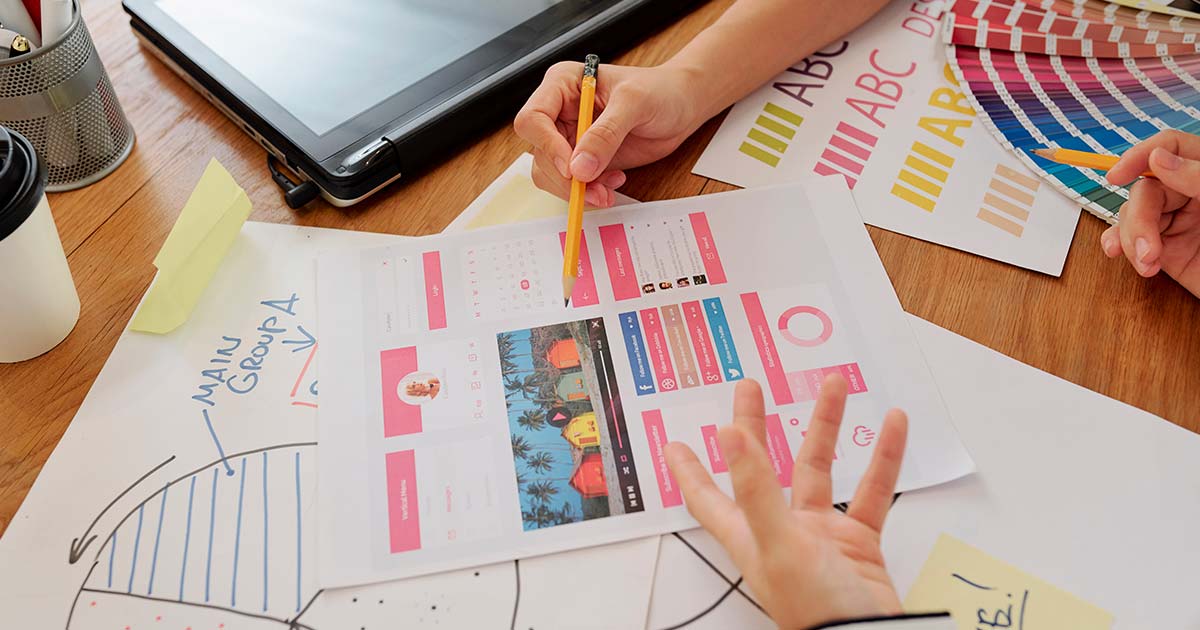
A brand guide, also known as a brand book or style guide, is a document that establishes the guidelines for creating and managing your brand’s image. It’s an essential tool for any business that wants to build a consistent, unified, and strong presence in the market.
Whether you work with a single designer or a full team, a brand guide ensures that everyone who touches your brand uses it correctly. It’s the rulebook that keeps your identity intact.
In this article, I explain what to include in your brand guide and how to create one that will serve your business for years.
📌 What Is a Brand Guide?
A brand guide is a living document that defines how your brand should look, sound, and feel across every touchpoint. It’s not just for designers—it’s for marketers, content creators, social media managers, and anyone who communicates on behalf of your brand.
💡 Think of it as the instruction manual for your brand. When everyone follows the same rules, your brand becomes recognizable, trustworthy, and professional.
🧾 Why You Need a Brand Guide
| Reason | Why It Matters |
|---|---|
| Consistency | Your brand looks and sounds the same everywhere |
| Efficiency | No one has to guess how to use your assets |
| Scalability | New team members or agencies can work independently |
| Protection | Prevents misuse of your logo, colors, and messaging |
| Professionalism | Signals that your business is serious and established |
💡 A brand guide doesn’t limit creativity—it channels it toward what works for your brand.
📋 What to Include in Your Brand Guide
1. Logo and Its Versions
Your logo is the most visible element of your brand. The brand guide must clearly define how to use it—and how not to.
| What to Include | Details |
|---|---|
| Primary logo | The full, preferred version |
| Alternate versions | Horizontal, vertical, icon-only |
| Color variations | Full color, white, black, reversed |
| Clear space | Minimum space around the logo |
| Minimum size | Smallest size where logo remains legible |
| Prohibited uses | What not to do (stretching, changing colors, adding effects) |
💡 Include visual examples of correct and incorrect usage. A picture is worth a thousand words.
2. Brand Story and Purpose
Your brand guide should remind everyone why the brand exists. This section grounds all design and communication decisions in your core identity.
| Element | Description |
|---|---|
| Mission | What you do and why you exist |
| Vision | Where you’re going |
| Values | What you stand for |
| Origin story | How the brand came to be |
| Brand personality | Descriptors that define your character (e.g., professional, approachable, innovative) |
💡 When people understand why your brand exists, they make better decisions about how to represent it.
3. Tone of Voice
Your tone of voice defines how your brand sounds. This section ensures consistency across all written communication.
| What to Include | Details |
|---|---|
| Voice description | The consistent personality behind your words (e.g., confident, empathetic, direct) |
| Tone adaptations | How voice adjusts for different contexts (social media vs. customer service vs. formal documents) |
| Vocabulary guidelines | Words to use and words to avoid |
| Writing style | Sentence structure, formality level, use of humor |
| Examples | Sample phrases showing the tone in action |
💡 Your voice is who you are. Your tone is how you express it in different situations. Both belong in your brand guide.
4. Color Palette
Colors are one of the most recognizable elements of your brand. Define them clearly so they’re used consistently.
| Format | Purpose |
|---|---|
| HEX | Web and digital design |
| RGB | Screens and digital displays |
| CMYK | Print materials |
| Pantone (PMS) | Professional printing and brand consistency |
| What to Include | Details |
|---|---|
| Primary colors | The main colors of your brand |
| Secondary colors | Supporting colors for accents and backgrounds |
| Color usage | When to use each color (e.g., primary for logos, secondary for backgrounds) |
| Color combinations | What works together and what doesn’t |
💡 Always include color codes in all formats. A designer working in print needs CMYK; a web designer needs HEX.
5. Typography
Typography affects how your brand is perceived. Define your font system clearly.
| What to Include | Details |
|---|---|
| Primary typeface | The main font for headings and body text |
| Secondary typeface | Alternative font for specific applications |
| Font weights | Regular, bold, light, etc. |
| Sizes | Hierarchy: headings, subheadings, body text, captions |
| Usage rules | When to use each font and weight |
💡 Limit your fonts to 2-3 families. Too many fonts create visual chaos.
6. Imagery and Visual Style
Define how images, illustrations, and graphics should look.
| What to Include | Details |
|---|---|
| Photography style | Types of photos (professional, candid, lifestyle) |
| Color treatment | Filters, saturation, mood |
| Illustration style | Consistent approach to illustrations |
| Iconography | Icon style and usage |
| Graphic elements | Patterns, textures, shapes that belong to your brand |
💡 A consistent visual style makes your brand instantly recognizable, even without the logo.
7. Communication Guidelines
Define how your brand communicates across different platforms.
| Platform | What to Define |
|---|---|
| Website | Navigation style, content structure, calls to action |
| Social media | Post formats, captions, hashtags, engagement style |
| Subject lines, salutations, signatures | |
| Advertising | Headline style, visual approach, messaging |
| Customer service | Greetings, problem resolution language, closing tone |
💡 Include sample messages for each platform. Examples are more helpful than abstract rules.
8. Brand Application Guidelines
Define how to apply your brand across different formats and media.
| Format | Guidelines |
|---|---|
| Business cards, letterhead, brochures, packaging | |
| Digital | Website, email signatures, social media profiles |
| Merchandise | Apparel, promotional items, swag |
| Signage | Storefront, banners, trade show displays |
| Video | Intros, outros, lower thirds |
| What to Include | Details |
|---|---|
| Sizing requirements | Minimum and optimal sizes for each application |
| Background requirements | What backgrounds work (and what don’t) |
| Adaptations | How the logo adjusts for different formats |
💡 The more specific your guidelines, the easier it is for everyone to use your brand correctly.
9. Examples and Use Cases
Show, don’t just tell. Include real examples of how your brand should look in practice.
| What to Include | Examples |
|---|---|
| Correct applications | Business card mockups, website screenshots, social media posts |
| Incorrect applications | What not to do (with explanations) |
| Campaign examples | How your brand looks in different marketing materials |
| Seasonal adaptations | How your brand adapts for special occasions (if applicable) |
💡 Examples help users understand the rules in context. They’re often more useful than written guidelines alone.
🛠️ How to Create Your Brand Guide
Step 1: Gather Your Assets
Collect everything you need to document:
- Logo files (all versions and formats)
- Color codes (HEX, RGB, CMYK, Pantone)
- Font files and licensing information
- Sample images and graphics
- Existing marketing materials
Step 2: Define Your Rules
For each element, define the rules clearly:
- What is correct?
- What is incorrect?
- When to use each version?
- What are the exceptions?
Step 3: Create Examples
Show correct usage through mockups and examples. Visual references are easier to understand than text alone.
Step 4: Organize Your Document
Structure your brand guide logically:
- Start with brand story and purpose
- Follow with visual elements (logo, color, typography)
- Add communication guidelines
- End with application examples
Step 5: Choose Your Format
| Format | Best For |
|---|---|
| Sharing with agencies, printers, and external partners | |
| Google Slides / PowerPoint | Easy to update, accessible to team |
| Web page | Always accessible, easy to navigate |
| Printed booklet | For onboarding, important partners |
💡 I recommend using Google Slides. It’s free, accessible from anywhere, and easy to update as your brand evolves.
📋 Brand Guide Checklist
Before finalizing your brand guide, verify:
- ☐ Logo versions documented (color, white, black, horizontal, vertical)
- ☐ Clear space and minimum size defined
- ☐ Prohibited uses illustrated
- ☐ Color codes in all formats (HEX, RGB, CMYK, Pantone)
- ☐ Typography defined (fonts, weights, sizes)
- ☐ Tone of voice described with examples
- ☐ Imagery style defined
- ☐ Communication guidelines for each platform
- ☐ Application guidelines for print, digital, and merchandise
- ☐ Examples of correct and incorrect usage
- ☐ Easy to access and share
📚 Useful Internal Links
- Corporate Identity: Who You Really Are
- Tone of Voice: The Personality of Your Brand
- Logo: The Face of Your Brand
- 4D Graphic Design Methodology
✅ Conclusion
A brand guide is more than a document—it’s the foundation for consistent, professional, and recognizable branding. It protects your identity, empowers your team, and ensures that everyone who represents your brand does so correctly.
Remember:
- Include all logo versions and usage rules
- Document your colors in every format
- Define your typography system
- Describe your tone of voice with examples
- Show correct and incorrect usage
- Keep it accessible and easy to update
- Use it consistently
Your brand is an investment. A brand guide ensures that investment pays off—every time your brand appears.
Create your brand guide. Protect your identity. Build recognition.